


Detroit Homicide Lawyer
 If you are facing homicide or manslaughter charges in Detroit, you are confronting one of the most serious situations in criminal law. The consequences of a conviction include decades in prison or even life without parole. The stakes demand immediate, strategic action from the moment you learn you are under investigation.
Before speaking with police, signing any documents, or consenting to searches, you need experienced legal representation. Even statements made in the belief that you are helping yourself can become the foundation of the prosecution’s case against you. Our attorneys at Federal Criminal Attorneys of Michigan represent clients charged with homicide and manslaughter throughout Detroit and Wayne County. Call (800) 529-7747 or contact us online for an immediate consultation.
Why Choose Federal Criminal Attorneys of Michigan
 Our firm has built a reputation for aggressive, effective defense in Detroit’s most serious criminal cases. We understand that homicide and manslaughter cases require not just legal knowledge, but strategic thinking, thorough investigation, and the ability to challenge the prosecution’s evidence at every stage.
Federal Criminal Attorneys of Michigan has successfully defended clients in Wayne County Circuit Court and federal court for over three decades. Our lead attorney, Sanford Schulman, has handled over 4,000 criminal cases and has appeared before every federal judge in both the Eastern and Western Districts of Michigan. We have secured many favorable case results, including acquittals, charge reductions, and successful self-defense claims.
Our approach combines meticulous case preparation with aggressive courtroom advocacy. We retain forensic experts, accident reconstructionists, and medical specialists to challenge the state’s evidence. We investigate independently, preserving evidence that prosecutors may overlook and identifying witnesses the police never interviewed. When federal murder charges carry potential death penalty exposure, we have the experience to address capital defense procedures and fight to protect your life.
Michigan Homicide and Murder Charges
 Michigan categorizes unlawful killings into several distinct offenses, each carrying different elements and penalties.
- First-degree murder includes premeditated murder and felony murder. Premeditated murder requires proof that the defendant planned the killing, even if only moments before the act. Felony murder is also classified as first-degree murder, and it occurs when a death results during the commission of certain felonies, regardless of intent to kill. First-degree murder carries a mandatory sentence of life without parole.
- Second-degree murder involves intentional killings that lack premeditation and killings committed with extreme recklessness, demonstrating a depraved indifference to human life. The statute allows punishment ranging from any term of years to life imprisonment.
- Manslaughter covers killings committed in the heat of passion without premeditation or killings resulting from gross negligence. The maximum penalty is 15 years in prison. Manslaughter charges often arise from sudden altercations, accidents involving reckless behavior, or situations where self-defense claims exist but prosecutors dispute their validity.
- Operating while intoxicated causing death applies when a death results from drunk or drugged driving. This felony involves extensive forensic evidence, including blood alcohol testing, toxicology reports, and accident reconstruction.
What the Prosecutor Must Prove for a Murder or Manslaughter Conviction in Michigan
To secure a murder or manslaughter conviction in Michigan, prosecutors must prove every element of the charged offense beyond a reasonable doubt.
For first-degree murder, they must establish that the defendant either planned and deliberated the killing (premeditation) or that a death occurred during the commission of certain felonies (felony murder). Second-degree murder requires proof of an intentional killing without premeditation or conduct demonstrating wanton and willful disregard for life.
Manslaughter convictions require proof that the defendant killed in the heat of passion following adequate provocation or caused death through grossly negligent conduct. The prosecution must also prove causation, that the defendant’s actions directly caused the victim’s death.
If there is any reasonable doubt about any element of an offense, the jury must return a not guilty verdict.
Potential Penalties for Homicide and Manslaughter in Michigan
 The potential consequences of a homicide conviction in Michigan are severe:
- First-Degree Murder: Mandatory life without parole
- Second-Degree Murder: Life or any term of years
- Manslaughter: Up to 15 years in prison
- OWI Causing Death: Up to 15 years in prison
Additional felony charges often accompany homicide cases, including felony firearm (mandatory 2-year consecutive sentence), tampering with evidence, and other related offenses. Multiple deaths can result in multiple counts, substantially increasing sentencing exposure.
What About the Death Penalty?
While Michigan abolished the death penalty, federal murder charges prosecuted in Detroit’s federal court can still carry a death sentence. Federal capital cases involve additional procedural requirements, including death penalty qualification hearings and bifurcated trials. Our attorneys have experience defending against federal capital charges and understand the serious issues these cases present.
Can Murder Charges Be Reduced to Manslaughter?
 Yes, murder charges can be reduced to manslaughter in Michigan through negotiation or motion practice. Reductions typically occur when the prosecution cannot prove premeditation, when evidence supports heat of passion, or when self-defense claims create reasonable doubt about intent. Prosecutors may agree to reduced charges when key witnesses are unreliable, forensic evidence is weak, or constitutional violations threaten suppression of critical evidence.
Defense attorneys can also argue for instruction on lesser-included offenses at trial, allowing juries to convict of manslaughter instead of murder. Even strong murder cases may resolve as manslaughter when defense investigation reveals mitigating circumstances prosecutors initially overlooked during charging decisions.
Defense Strategies in Homicide and Manslaughter Cases
Effective defense in homicide cases requires challenging the prosecution’s narrative at every level. Common defense strategies include:
Challenging Intent
The prosecution must prove not just that a death occurred, but that the defendant intended to cause it or acted with the requisite mental state. We examine the evidence for gaps between the tragic outcome and proof of malice or planning. Text messages, witness statements about prior relationships, and medical evidence can demonstrate that the state has charged a higher degree of homicide than the facts support.
Self-Defense Claims
Michigan’s Self-Defense Act permits the use of deadly force when a person honestly and reasonably believes it is necessary to prevent imminent death, serious bodily harm, or sexual assault. The law requires that the person was not committing a crime and had a legal right to be where they were. We gather evidence showing the perceived threat, prior violence by the alleged victim, and the defendant’s state of mind at the critical moment.
Challenging Causation
Death cases often involve complex medical evidence. Autopsies may reveal alternative causes of death, pre-existing conditions, or treatment decisions that contributed to the outcome. We retain independent medical experts to review autopsy reports and challenge the prosecution’s causation theory.
Attacking Witness Credibility
Many homicide cases depend heavily on eyewitness testimony. We investigate witnesses for bias, inconsistent statements, intoxication at the time of the incident, and motives to lie. Recorded statements, social media posts, and prior relationships often reveal credibility problems the prosecution hopes to conceal.
Forensic and Scientific Challenges
Ballistics evidence, DNA analysis, gunshot residue testing, and crime scene reconstruction all involve scientific limitations and potential errors. We challenge lab procedures, testing protocols, evidence handling, and the prosecution’s interpretation of forensic results.
Suppression Motions
Evidence obtained in violation of constitutional rights must be excluded. We file motions to suppress statements taken without proper Miranda warnings, evidence seized in illegal searches, and confessions obtained through coercion. Successful suppression can eliminate the prosecution’s most damaging evidence.
Protecting Your Rights During an Investigation
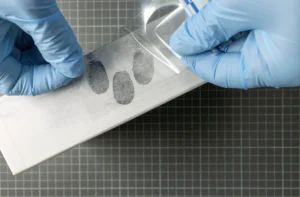 If you are under investigation for homicide or manslaughter, your actions in the early stages significantly impact your case:
- Exercise Your Right to Silence: Do not answer questions, provide explanations, or give your “side of the story” without an attorney present. Police may suggest that silence makes you look guilty, but statements made under stress often contain inconsistencies that prosecutors exploit at trial.
- Refuse Consent Searches: Do not consent to searches of your phone, vehicle, home, or person. Requiring police to obtain a warrant forces them to establish probable cause and creates a record for potential suppression motions.
- Preserve Evidence: Identify potential surveillance cameras, save text messages and call logs, and document your location data. Evidence disappears quickly; security footage is often deleted within days.
- Do Not Contact Witnesses: Reaching out to witnesses, even casually, can be characterized as intimidation or evidence tampering. Allow your attorney to handle witness interviews.
- Avoid Social Media: Do not post about the incident, delete existing posts, or discuss the case online. Prosecutors routinely subpoena social media accounts.
The Detroit Homicide Case Process

Homicide cases in Wayne County proceed through several stages:
- Investigation and Arrest: Police investigate, often for weeks or months, before making an arrest. The Wayne County Prosecutor’s Office Homicide Unit reviews warrant requests before charges are authorized.
- Arraignment: The first court appearance occurs in Detroit’s 36th District Court, where the judge sets bond and schedules the preliminary examination.
- Preliminary Examination: This hearing, held within 14 days of arraignment unless waived, determines whether probable cause exists to bind the case over to circuit court. The defense can cross-examine witnesses and challenge the prosecution’s evidence.
- Circuit Court Proceedings: Cases bound over proceed to Wayne County Circuit Court’s criminal division for arraignment, motion practice, and trial. This is where substantive defense work occurs, including filing suppression motions, challenging evidence, and preparing for trial.
FAQ: Detroit Homicide and Manslaughter Defense
Can Prosecutors Use My Past Criminal Record in a Homicide Case?
Not automatically. In Michigan, prior convictions generally cannot be used just to suggest bad character. However, prosecutors may attempt to introduce prior acts for limited purposes, such as proving motive or intent under evidentiary rules.
Can Charges Be Filed Even If No Weapon Is Recovered?
Yes. Prosecutors do not need to recover a weapon to file homicide charges. Cases can proceed based on witness statements, forensic evidence, surveillance footage, or circumstantial evidence.
What Happens If I Am Convicted of Felony Firearm Possession Along With Homicide?
Felony firearm possession carries a mandatory two-year prison sentence that runs consecutively to any homicide sentence, meaning the two years are added on top of your murder or manslaughter conviction. Multiple counts can stack, substantially increasing total prison time.
Can I Be Charged With Murder If I Did Not Directly Cause the Death?
Yes, under Michigan’s felony murder rule. If a death occurs during certain felonies, all participants can be charged with first-degree murder even without personally causing the death or intending it.
What Is the Difference Between Voluntary and Involuntary Manslaughter?
Voluntary manslaughter involves intentional killing in the heat of passion after provocation. Involuntary manslaughter involves unintentional death caused by gross negligence or recklessness. Both carry a maximum penalty of up to 15 years in prison under Michigan law.
Contact a Detroit Homicide Defense Attorney
A homicide or manslaughter charge threatens your freedom, your future, and your family. The prosecution has begun building its case. You need experienced legal representation fighting equally hard for your defense.
Federal Criminal Attorneys of Michigan has defended homicide cases throughout Detroit and Wayne County for over 30 years. We know the judges, the prosecutors, and the procedures. More importantly, we know how to challenge the state’s evidence and present compelling defenses. Contact us online or call (800) 529-7747 for an immediate consultation.

Defendant Found Not Guilty
Defendant Found Not Guilty
Defendant Found Not Guilty
Defendant charged with possessing 100 kilograms of cocaine.
DEFENDANT FOUND: NOT GUILTY
Defendant Found Not Guilty
Defendant Found Not Guilty
© 2026 Federal Criminal Attorneys of Michigan . All Rights Reserved.
