


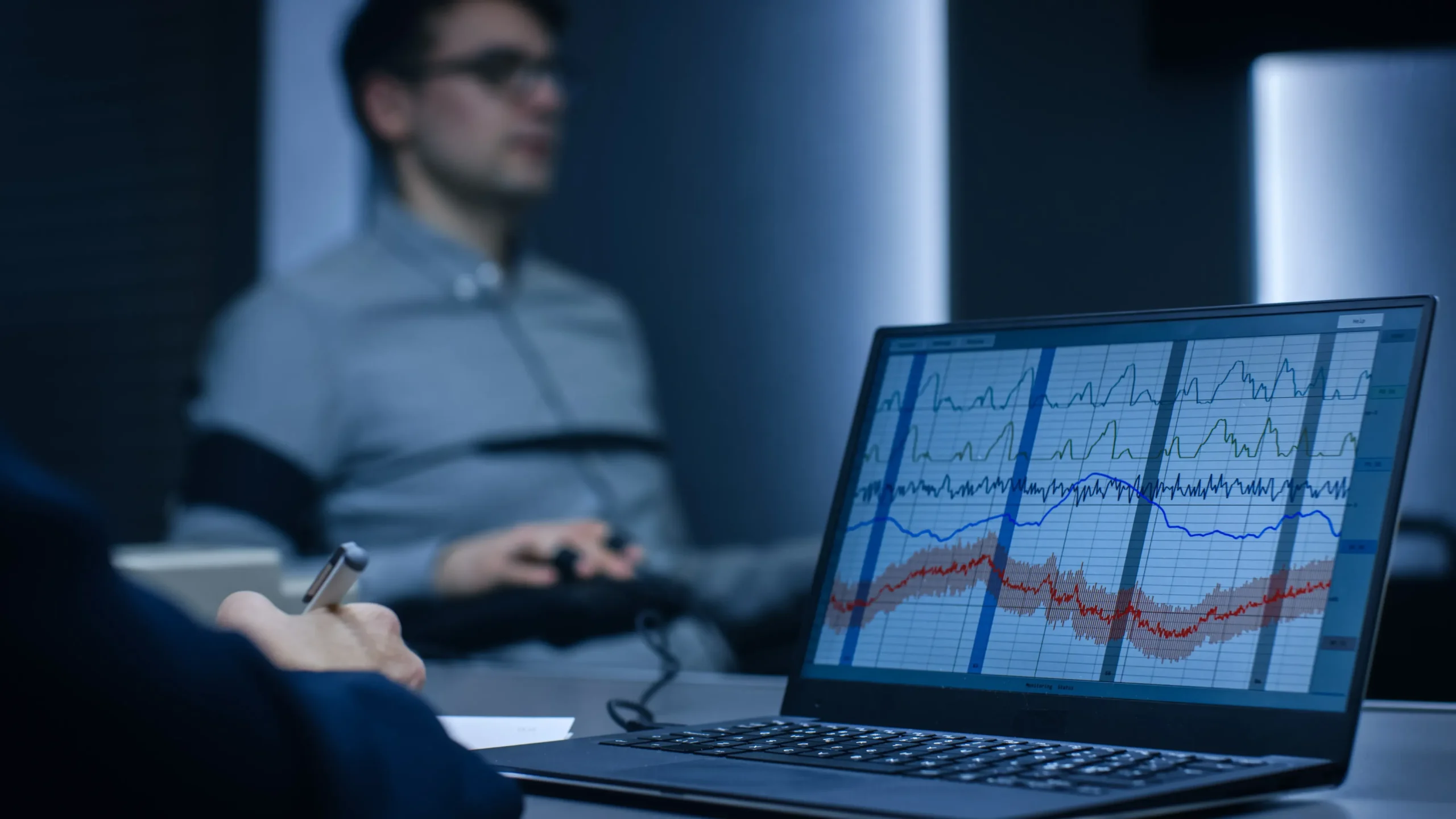
Polygraph tests often come up during Michigan criminal investigations. Detectives or federal agents sometimes suggest one as a way to “prove honesty” or “clear things up,” but these tests often serve investigative goals—not your defense. The machine looks technical, but its readings do not decide guilt or innocence. A choice to take a test can still shape how investigators, prosecutors, and judges see a case.
How Polygraphs Work
Polygraphs measure breathing, blood pressure, and skin response as an examiner asks questions. The examiner interprets changes in the body as signs of stress. Stress, however, does not always mean dishonesty. Someone nervous about being accused could show the same response as someone who lies.
From the perspective of a criminal defense lawyer, this uncertainty makes the process risky. Officers may treat a “failed” result as proof of guilt even though Michigan courts reject polygraph results as evidence. Police often use the test as another interview tool, asking new questions and pressing for explanations that lead to additional statements. Those comments, not the chart readings, often end up in police reports or prosecutor files.
Our defense attorneys warn that polygraph consent forms often waive important constitutional rights. Once you sign, anything you say before, during, or after the exam can be used against you, even if the test itself never reaches trial.
What Michigan Law Says About Polygraph Evidence
Michigan’s rules are clear: polygraph results are not admissible in criminal or civil trials. Judges exclude both the score and the fact that a test occurred. The rule exists because courts consider polygraphs unreliable and worry jurors might treat the machine as scientific proof.
However, anything said during a polygraph session is treated like any other statement to law enforcement and can be used in court. If investigators respected Miranda rights and you spoke voluntarily, prosecutors can use those words in court. A criminal defense lawyer will examine whether your rights were fully explained and whether the setting pressured you to talk.
In limited cases, Michigan law lets people accused of certain sex crimes request a polygraph while still under investigation. The goal is to confirm whether police pursued every lead. However, even that test can create risk if investigators use post-exam discussions to gather new information.
Why Agreeing to a Polygraph Can Be Dangerous
Once the sensors attach, the examiner controls the questions. Your defense attorney from Federal Criminal Attorneys of Michigan would point out that stress responses might come from fear, medical issues, or medication. Misread signals can label an honest person as deceptive.
The greater danger often lies in what happens during or after the exam:
- Extended questioning: The examiner may ask follow-ups that turn into a full interrogation.
- False confidence: A “pass” may not stop prosecutors from filing charges.
- Added pressure: A “fail” may push investigators to dig deeper or demand a plea.
Our attorneys at Federal Criminal Attorneys of Michigan often see investigators rely on subjective impressions of honesty rather than verifiable facts. Even when the test is voluntary, those impressions can influence plea discussions or pretrial decisions.
When a Polygraph Might Be Considered
Occasionally, a criminal defense lawyer may suggest a controlled polygraph for strategic reasons. For example, if a case rests on conflicting statements and no physical evidence, a private exam—conducted by a neutral examiner outside police control—could help persuade a prosecutor to reconsider charges.
In those limited settings, we would ensure:
- The examiner is independent and qualified under Michigan standards.
- The questions are reviewed in advance.
- The results are shared only under agreed conditions.
At Federal Criminal Attorneys of Michigan, we never permit clients to take a test arranged by investigators without a complete legal review and strategic discussion. We evaluate whether the prosecution might benefit more from the process than the defense, and whether the results could later harm plea or sentencing positions.
Let a Seasoned Federal Criminal Defense Lawyer Help You Decide Whether or Not Taking a Polygraph Test is in Your Best Interests
Polygraph results cannot prove guilt or innocence in a Michigan courtroom, but they can influence the direction of a case. Deciding whether to take one requires a clear understanding of your rights and the risks behind every question. Hiring a defense attorney to guide you through the process can have a positive effect on the outcome.
At Federal Criminal Attorneys of Michigan, we help clients weigh those risks, plan a strategy before any meeting with investigators, and protect every word on record. Our mission is simple: defend your future through careful, informed choices—long before the machine ever switches on. Find out more by contacting us online to schedule a consultation and discuss whether a polygraph test could impact your case.
We proudly serve Detroit and locations throughout Michigan.
Federal Criminal Attorneys of Michigan
500 Griswold St # 2340
Detroit, MI 48226
Open 24 hours


