


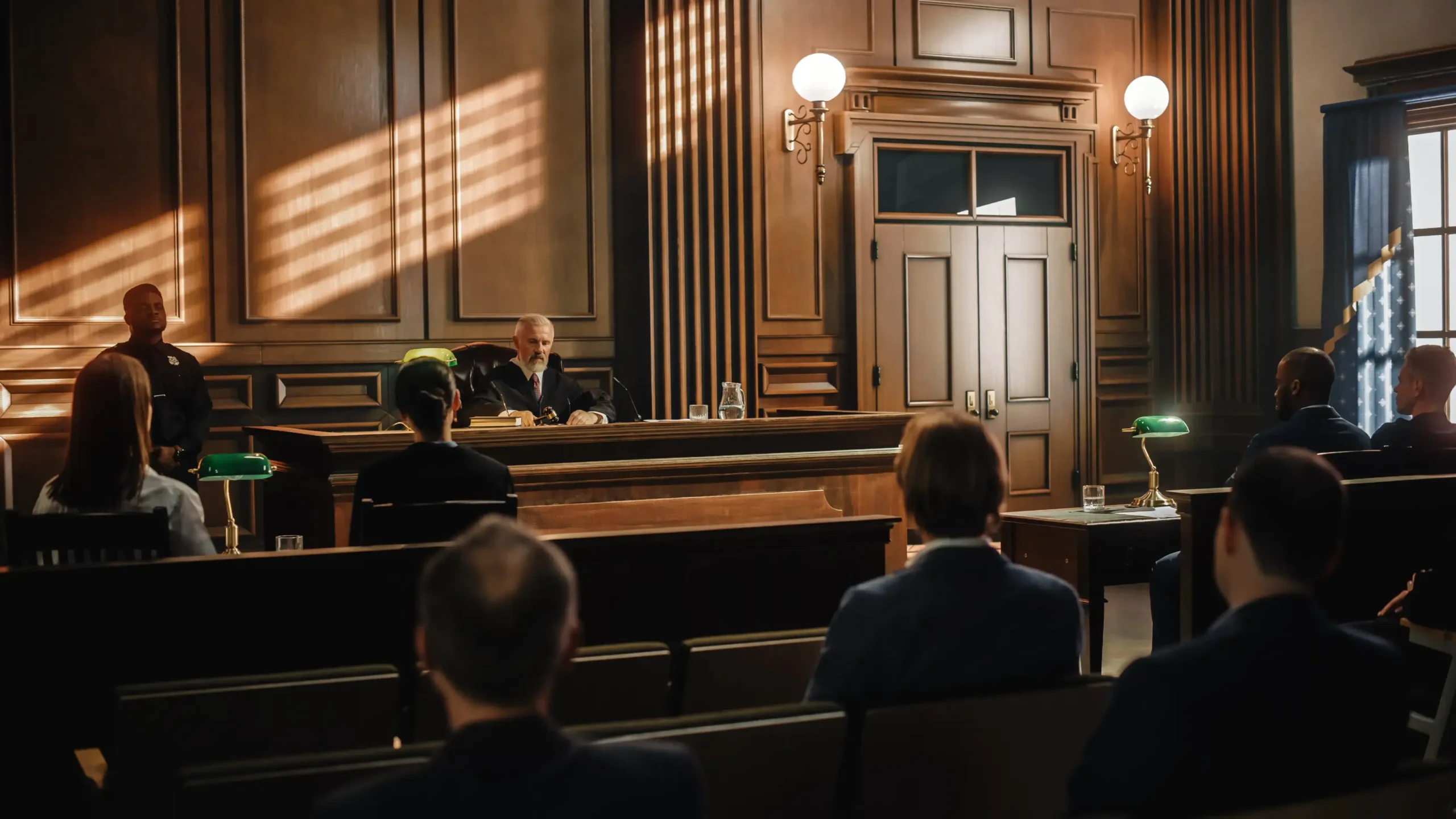
Criminal and civil cases are handled differently in Michigan courtrooms. However, most cases follow a consistent path: early hearings, evidence exchange, motions, and either a negotiated resolution or a trial.
A criminal case involves the State accusing someone of breaking a law, with outcomes that can include jail, probation, or fines, while a civil case is usually one person or business asking a court to order money damages or specific action. The courtroom process depends on where the case is filed, what must be proven, and which rules apply.
Where Your Case Starts in Michigan
Most cases begin in a trial court, and the type of court matters because it determines the structure of the first hearings and the pace of the case. District courts handle many misdemeanor cases and the early stages of felony cases, while circuit courts handle felony trials and larger civil disputes.
On the civil side, the district court generally has jurisdiction when the amount in dispute does not exceed $25,000; higher-value cases typically belong in circuit court. Small claims is its own track inside the district court, with simpler hearings and a current damages limit of $7,000 in many cases. A case that fits small claims usually moves faster, but it also comes with tradeoffs that the court forms warn you about, such as limits on procedure and review.
What a Criminal Case Usually Looks Like
Criminal cases in Michigan state court often begin with an arrest or the issuance of a warrant, followed by an arraignment. At arraignment, the judge formally addresses the charge, advises the accused of key constitutional rights, and determines conditions of release when permitted. Conditions may include bond, no-contact orders, drug testing, or other measures designed to protect public safety and ensure future court appearances.
Steps involved in the typical criminal case include:
- Arraignment: The judge states the charge, addresses release conditions, and sets the next dates.
- Probable cause conference: The parties meet with the court to discuss next steps and whether early resolution is possible.
- Preliminary examination: The prosecutor must present sufficient evidence to justify sending the case to the circuit court for felony prosecution, unless the hearing is waived.
- Circuit court: The case can move through motions, plea discussions, and trial scheduling once it is in circuit court.
What a Civil Case Usually Looks Like
A civil case usually starts when one side files a complaint, and the other side files an answer. After that, the court typically sets a schedule to establish deadlines for discovery, motions, and key hearings. Michigan’s civil rules allow the judge to use scheduling conferences and orders to keep the case organized and moving.
Discovery is the evidence-sharing phase, during which each side may request documents, submit written questions, and take depositions under the Michigan Court Rules. An attorney can clarify what information must be produced, what can be challenged, and what deadlines matter most.
Many civil cases do not reach trial because the court can decide some disputes through motions. A common example is summary disposition under Michigan Court Rule 2.116, which may be used when a party argues that no genuine factual dispute requires trial.
However, if a civil case does go to trial, the following will occur:
- Early scheduling order: The judge sets deadlines for discovery, motions, and case events.
- Discovery: Each side requests and exchanges evidence, which often shapes settlement talks.
- Motion practice: The court may narrow the issues or end the case if the law and record support such action.
- Trial and judgment: If the case does not resolve, a judge or jury hears evidence and enters a decision.
Proving Your Case in Criminal vs. Civil Court
The biggest difference between criminal and civil cases is what must be proven and what is at stake. Criminal court focuses on whether the State can prove every element of a crime beyond a reasonable doubt, which is the highest burden of proof in our justice system. During the process, several constitutional protections govern everything from police conduct to what evidence the jury can hear.
Civil court focuses on proving liability and damages by a preponderance of the evidence, meaning the claim is more likely true than not. The civil litigation process is also governed by the constitutional right to due process and, in many cases, a jury trial.
In both kinds of cases, the judge manages the courtroom, rules on objections, and enforces deadlines, while jurors decide facts in jury trials. Good preparation often looks similar across the two systems, and a lawyer can help translate court dates into a clear list of what must happen before the next hearing.
Contact Our Law Firm for Federal Criminal Defense Assistance Today
If you are facing criminal charges, our defense lawyers from Federal Criminal Attorneys of Michigan can guide you through the process and work to help you achieve the best possible outcome. Learn more by contacting us online for a confidential consultation with our criminal defense team.
We proudly serve Detroit and locations throughout Michigan.
Federal Criminal Attorneys of Michigan
500 Griswold St # 2340
Detroit, MI 48226
Open 24 hours


