


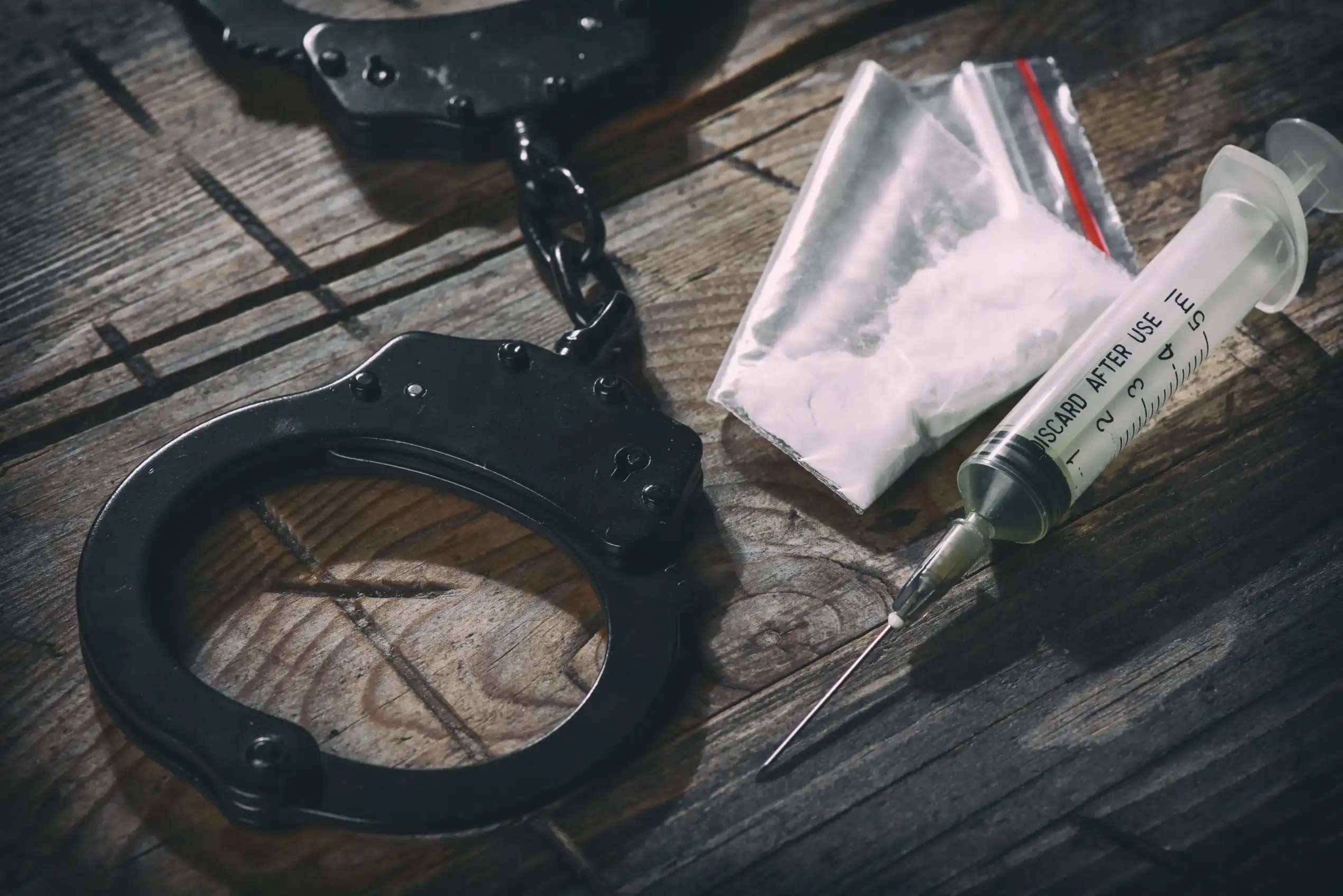
Federal drug trafficking cases often involve mandatory minimum prison sentences established by federal statute. These laws require judges to impose at least a specific minimum term when certain drug types, quantities, or prior convictions are involved. Unlike many state court cases, federal judges generally have limited discretion to go below these minimums, even when mitigating factors such as personal history, treatment progress, or family circumstances are present.
Whether a mandatory minimum applies depends on the specific charge, the alleged drug quantity, and how the case is charged. In some situations, limited statutory mechanisms may allow a sentence below the mandatory minimum, but those options are narrow and depend on precise legal and factual conditions.
Mandatory Minimums and Federal Drug Statutes
Mandatory minimums in federal drug cases usually come from the main trafficking statute and related conspiracy laws, not from Michigan sentencing rules. A lawyer will typically focus on the statutory minimum sentence because the guideline range and the judge’s discretion cannot override a floor set by federal law.
Drug quantity drives many federal minimums, but the charging language is just as important as the weight. Prosecutors often write a threshold amount into the charge, and that number can lock in a minimum if the case ends in a conviction on that charge. Conspiracy charges can add risk because the government may argue that a person is responsible for amounts tied to the broader plan, not only the drugs found in one stop or one search.
Allegations That Can Increase the Minimum
Minimums can also jump when the government adds certain allegations. Examples include allegations involving serious bodily injury or death, firearm-related conduct tied to the offense, or location-based enhancements under federal law. Careful analysis of the exact allegations and the proof behind them becomes the center of the defense.
An attorney will examine the documents that set the floor, including the complaint, indictment, and any notice that attempts to raise the minimum based on a prior record. That early work is critical because the initial charges can shape the rest of the case.
Why Michigan Drug Cases Sometimes Move Into Federal Court
Many people in Michigan expect drug charges to stay in state court under Michigan’s controlled substances laws. However, a federal court becomes more likely when the conduct crosses state lines, involves larger alleged quantities, or draws attention from federal agencies. Your lawyer will map the investigation’s origins and why it shifted, because that history can affect motions, suppression issues, and later negotiations.
Federal cases commonly grow out of task force work, wire investigations, controlled buys, or long-running surveillance tied to multiple people. Interstate highways, shipping routes, and border activity can bring federal interest, even when an arrest happens in one Michigan county. Federal prosecutors may also take cases when they believe a federal penalty structure fits the conduct better than the state range.
How Quantity, Type, and Prior Records Set the Floor
Mandatory minimums usually hinge on three building blocks: drug type, the threshold weight tied to that drug, and whether the government claims a prior record that raises the minimum. Your lawyer will take a hard look at testing and lab reports, because the government must prove what the substance is and how the weight was measured.
Weight rules can surprise people. Federal law can treat mixtures and substances differently than people expect, and the purity of certain drugs can also impact a sentence. Charging language can also pull in “relevant conduct,” meaning prosecutors may argue that amounts outside the seized drugs still count at sentencing. Conspiracy theories can widen that argument if the government claims you share responsibility for what others handled.
Prior records can raise the stakes, but not every prior offense qualifies the way people assume. Federal enhancements often require specific steps and specific proof. The government must follow notice procedures if it tries to increase the statutory minimum based on prior convictions. Timing, the exact statute of conviction, and the case’s outcome can all help determine that minimum.
Challenging Weaknesses in the Prosecution’s Case
An attorney will challenge weak links in the prosecution’s case, such as overstated drug quantity, limited proof of involvement, or an enhancement that does not fit the record. Strong work in these areas can shift the minimum, shift the guideline range, or create leverage for a better resolution.
Tools That Can Change a Mandatory Minimum
Several legal tools can reduce or avoid a mandatory minimum sentence in the right case, but each has its own rules and limits. Your lawyer will determine whether any lawful path exists to go below the minimum floor and reduce your sentence. That answer will largely shape plea strategy, motion practice, and risk planning.
A short list of common paths includes:
- Safety valve relief in qualifying cases, which can allow sentencing without the mandatory minimum when the law’s conditions are met.
- Cooperation-based reductions in cases where the government files the proper motion tied to substantial assistance.
- Charge negotiations that change the statutory exposure when the facts and proof support a different charge.
- Litigation that narrows drug quantity findings or defeats an enhancement that would otherwise raise the floor.
No single option fits every case. Eligibility rules can be strict, and the facts must support the result. Planning also needs to account for what the government can prove at trial, not only what it claims in early paperwork.
An Experienced Michigan Federal Drug Crime Defense Lawyer is Ready to Tell You More
At Federal Criminal Attorneys of Michigan, we review federal drug trafficking cases with close attention to how mandatory minimum penalties are triggered and applied. Our Michigan federal drug crime defense lawyers can help you understand what you are facing and what options may exist to limit the consequences.
If you are facing federal drug charges and need clear information about your next steps, contact us today.
We proudly serve Detroit and locations throughout Michigan.
Federal Criminal Attorneys of Michigan
500 Griswold St # 2340
Detroit, MI 48226
Open 24 hours


